Sunday, March 13, 2011

Brisbane streetscapes new and old

As always these posts reflect my opinions about the topics I discuss, they are written with the knowledge that there are divergent views about every aspect of trees in our urban environment. It is my hope that my ideas are presented in a logical and rational manner and substantiated by the evidence available to even the casual reader.

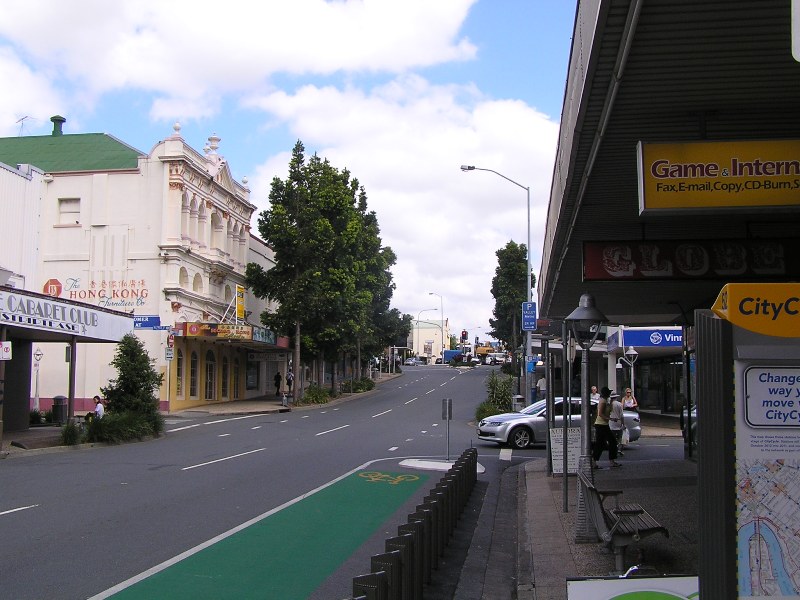
The efforts to enhance the pedestrian environment are evident many Brisbane streets and are particularly clear when walking from Fortitude Valley train station up St Pauls Terrace.

The planting beds and benches that have been created on both sides of Brunswick Street are looking well established the Kauri Pines have grown significantly and are still young enough to have relatively dense foliage just at the height of the building awnings - visible greenery to the person on the street.

Sure it could be pointed out that in time these trees may well produce fruit that are frustrating to many street users, however leaf flower and seed drop are all part of normal growing patterns, and personally I have little problem with this aspect of trees' life cycle.


These planter beds have managed to reclaim some of the street for pedestrian users from the all powerful and all demanding motor car...and that in itself is (in my mind) a great move forward, to be truely effective there are other factors that have to be managed..but this is a good beginning.

It is interesting and thought provoking to compare this new streetscape with the older streets of St Pauls Terrace and the truely wonderful little Rogers Street.

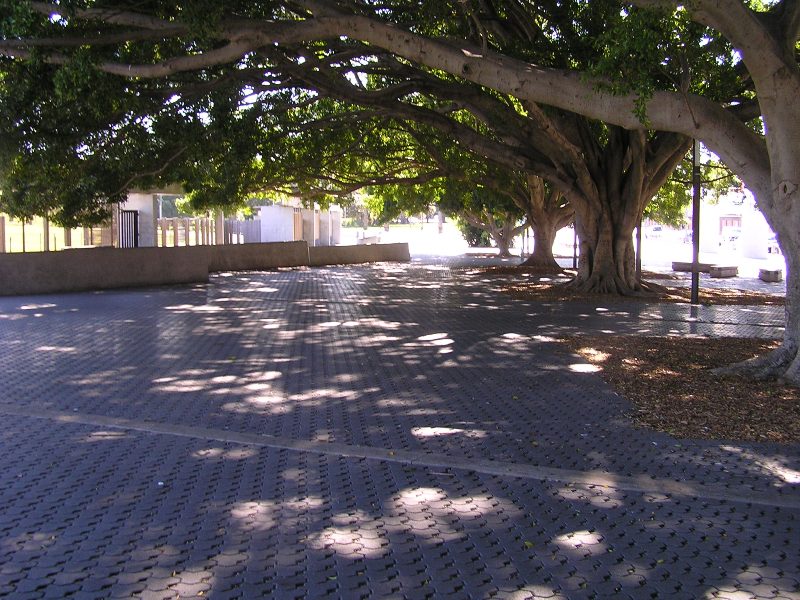
At the top of St Pauls Terrace there's a line of mature figs which seem to have survived due to the presence of a school in the property fronting onto the street. None fo the attempts to install street trees on the opposite side of the street have been successful.

Rogers Street which also benefits from being adjacent to the school grounds and contains some fantastic examples of Brisbane street figs.

Now there is no question that the new plantings along Burnswick Street are a huge improvement for people (a great many people) passing through the valley, but I am confident that the majority of street users would prefer to be walking under the canopies of these beauties....
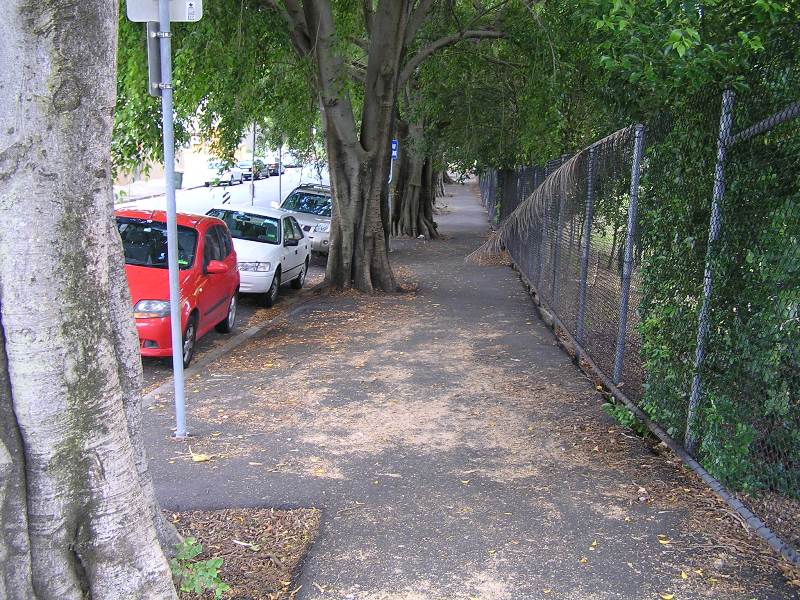
Yes I know that these figs are a nightmare for engineers, they disrupt the footpath and the kerb and channel....there's no question about that...

But personally I think it is a cost (and a small one relative to other rewards) worth paying for all the magnificent benefits they bring to our otherwise barren and hostile urban environment.

There are ways that trees like figs can be incorporated into new planned streetscapes, as with many of the challenges we face in city living it comes down to just how much you want something and are prepared to give up to have it.

I really hope as we get dragged kicking and screaming into the realisation of just how messed up our urban lifestyle is and the cumulative negative impacts it is having on everything around us (us included!)..that more and more of us will demand tree lined boulevards that reclaim space for pedestrians and the trees that make those streets places people enjoy, and actually gain benefits from being in.


Sunday, January 30, 2011

After the Brisbane flood - A View from the Gardens

[Let me first clearly state that I have not visited any of the more seriously affected suburbs, and that this post is in no way intended to deminish the huge impact that the recent flood has had on the lives of hundreds of Brisbanites.]

It just so happens I got the opportunity to visit Brisbane last Thursday to attend a meeting, and after sitting inside for three hours a walk through Brisbane's Old Botanic Gardens was in order to help clear my head.

As should be very clear to anyone who has read any of my posts here or over at The Veteran Tree Group Blog that I am fascinated by the living history that our veteran trees represent, and the Old Botanic Gardens are a perfect example of that.

I like almost every square metre of the gardens, I love picturing in my head the original intent of the planners and landscapers who laid out the basic pattern of plantings. Probably my favourite sections are the Bunya pine avenue,


the weeping fig avenue


and the remnant Blue Gum on the banks of the Brisbane River.


On entering the park from Alice Street I was a little surprised that along the revetment wall, footpath and river bank there was very little obvious physical evidence of the recent (just over a week ago) flood.

The only visual clue is the extend of dead grass along the bank and the eroded state of the  mulch and soil.


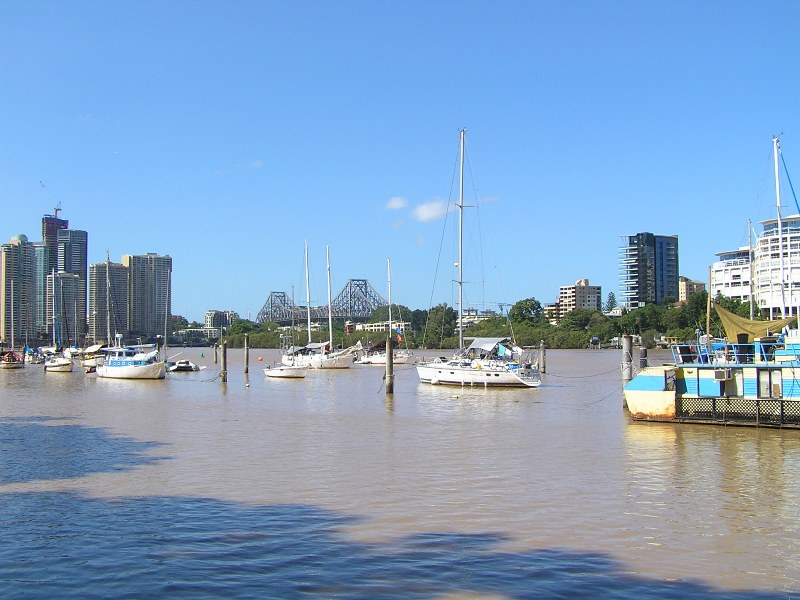
I find this part of the city against the river really quite beautiful, perhaps because the tall multistorey buildings are some distance away, or perhaps because the cliff face on the opposite bank is relatively unchanged from the view in the late 1800's....I have been to quite a lot of cities overseas that are built on large rivers, and I have visited four state capitals here in Australia that are on big rivers...but Brisbane (or at least this section..and Fig tree pocket) is probably one of the most beautiful I have seen.


Despite what I (like every other Australian with a TV) saw for days not much more than one week ago, the Brisbane River now looks as harmless and tranquil as ever (ok its still pretty brown!).

I know that there are a great many people - not just in Qld - still struggling to reconstruct their lives...some will never be able to do that, people died...But I personally get a great deal of comfort from the defiant resiliance and defiance of the trees along the banks of the river.

...its almost as if they would look at the 2011 flood event and say...hmmm bit of rain nice water around my roots...it is sobering to remember that some of these trees (the older plantings have seen and endured far far worse).

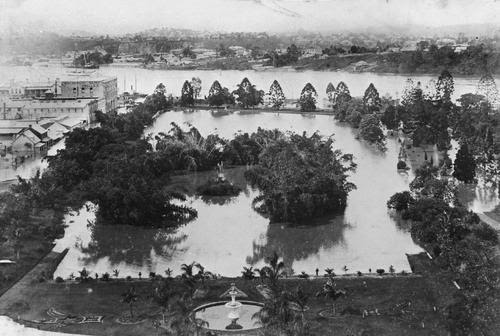
Flooded gardens 1890's water up to the high bank and into the formal garden area

Temporary dry dock on the bank of the river


I know that trees fail, get smashed by wind, rain, lightning, floods etc...however the capacity of trees to reiterate their growth after the most catastrophic events continuing their presence as habitat and as living organisms never fails to impress and comfort when events do turn nasty.

I like to think that Walter Hill (the first curator of the Brisbane gardens and a major force in the natural sciences throughout in early Queensland) who planted the avenue of Bunya pines would be pleased with the resiliance of those trees despite all that has happened in the intervening years since the 1840's.

Flood waters in 2011 did enter the centre of the gardens backing up through the stormwater system without breaching the high bank...a pattern of inundation repeated throughout the riverside suburbs.

Just like the trees in the gardens I think that those Brisbanites who have lost most if not all of their posessions will begin to recreate their lives as best they can...in a way our human version of reiteration. 


Wednesday, January 5, 2011

Water Sensitive Urban Design

Firstly, many thanks to the community group blog Saving Our Trees for bringing the following youtube video to my attention...Far too often those of us that advocate for a more rational and informed approach to the mangement of our urban environment hear the reprise "Oh yes it would be great to try that but its really not practical"

The facts consistently show not only is it practical, it is truely cost effective (beyond any quartely return or monthly balance sheet) and represents an integrated solution to a vast range of very common urban problems....WATCH, ENJOY AND BE INSPIRED.....


Go and visit the video home page of the organisation behind the brilliant design and installations works on Elmer Avenue...TreePeople

Friday, December 31, 2010

Sydney Centennial Park

Sticking with last posts' Sydney location I would just like to sing the praises of Centennial Park I had a wonderful time wandering around the parklands watching puppies racing across open grassed areas 

The Paddington gates to the parklands

It really can be a dog's life sometimes

some parts of the park are really quite traditionally formal, not unlike a British Royal Park;

An avenue of Melaleuca not far from the Paddington gates - probably part of an earlier carriage way
Cycleway and footpath flanked on both sides by a mixture of tree species

A short chain of ponds near the more formal herbaceous beds

in other parts I found myself wandering myself amongst a very beautiful patch of Melaleuca.


There were almost enough larger established trees to satisfy my obsession with Veteran Trees (there are never really enough!)


Even on the walk back into the city centre there were more wonderful fig trees to be in awe of;


Then there were some wonderfully well treed streets of some Sydney suburbs, spending most of my working life on the Gold Coast I wonder if Sydneysiders realise just how lucky and blessed they are to be able to walk along such canopied streets as these...mind you I know only too well of the complaints from car owners regarding the seasonal gifts from London Plane trees - its true I have little sympathy for them..such debris is part and parcel of plant growth.

Sydney Green Space

I love the impact that parks can have on you when walking through a major capital city, even small pocket parks....they have the capacity to transport your mind away from the hustle and bustle of the metropolis to a more reflective place.


I think that Sydney's Hyde Park is one such space, like its name sake in London it sits within the heart of the city...and every time I have visited that there have been many people making use of the green amenity provided by the lawns garden beds and trees.

The real value of these places is beginning to be recognised by local government and the general public. Movements like 'Healthy Parks, Healthy People' in Victoria are delivering the critical message about the intrinsic link between our access to green spaces and the maintenance of our physical and mental well being.


It is unfortunate that there still are a few people (including some Arborists) who seem unable to grasp the significance and value of green space in our urban environment.


Every city in Australia is facing increasing demands and pressure on the available space, urban infill, transport upgrades (both vehicular and pedestrian) are factors that result in less space to grow trees.


Green spaces like Hyde Park, and the Centennial Parklands are unique places, by virtue of their size they are able to deliver huge recreational benefits to residents and visitors alike.
 
Centennial Parklands
But the benefits from 'green exposure' can be gained even if the that green is limited to the street trees...in fact street trees (and their canopies) can have an enormous impact on phenomena such as the heat island effect.

Street Figs opposite the Sydney Football Stadium

Long term planning is essential in the management of these growing assets, and as previously pointed out the competition for space both above and below ground is getting ever more intense in all our cities.


Local government in the city of Sydney does seem to have more developed management plans than a great many other places I have visited. I do worry however that an unjustified (IMO) emphasis on percieved risk from larger established trees has been presented to the general public as the rational for tree management in a number of high profile locations...Hyde Park being one. 

Within such a dense urban environment there are no easy solutions to the competing demands placed on Local Government resources...many of the initiatives being followed in Sydney are a great improvement on what has gone before.


I do not think assessable risk justifies removing and replacing almost all the Hill's figs in Hyde Park...there may well have been a small number of trees which were so severely comromised that removal was entirely appropriate but it would seem unlikely (in the extreme) that all the tree removed thus far fell into that category. Nor have I ever been convinced by the spurious suggestion that an (IMO) improperly applied and highly subjective assessment of Safe Useful Life Expectancy (SULE) should have any bearing on decisions regarding these trees.  

The iconic avenue of Hills Figs at Hyde Park Sydney

That having been said, I do think that it is appropriate for the City of Sydney to develop long term plans for all their public trees and green spaces....and it would be incredible if those plans matched all of my own preferrences.

The impressive Anzac Memorial Hyde Park redevelopment


Monday, October 25, 2010

National Botanic Gardens Canberra

I really love visiting Botanic Gardens, whether they are the state garden, or one of the many regional gardens...or even in this case the national garden...I find them to be inspiring places that bring out ideas and thoughts about my place in horticulture and arboriculture that would probably otherwise never occur to me.

The National Garden in Canberra was the best garden yet...probably because of the striking combination of established Eucalypts with genera of plants laid out beneath them...across the site.

Entrance to the gardens from the cafe

There really is no way a post on the blog can do justice to the garden...but I will try and put up the best of the photos I took.

Blending shrubs under trees
  
One of the oldest established trees in the garden; The Parish Tree
 
Showy Banksia flowers

As always my eye is drawn towards interesting tree body language

Some of the trees had extraordinary cambium splits!
 
Bed of Acacia


Attractive water feature of the local rock strata
 
Very attractive temperate rainforest section

Raised timber walkway

The walkway goes for quite some distance 100m or more

By the time we had completed the short walk, which should according to the informational signage have taken just 90mins....3hrs had passed and it was time to rush to the airport and fly out of our nation's capital.

I could easily imagine spending a great many days wandering around the Nation Botanic Gardens if I lived in Canberra.

I suspect it is exactly what a great many people do.